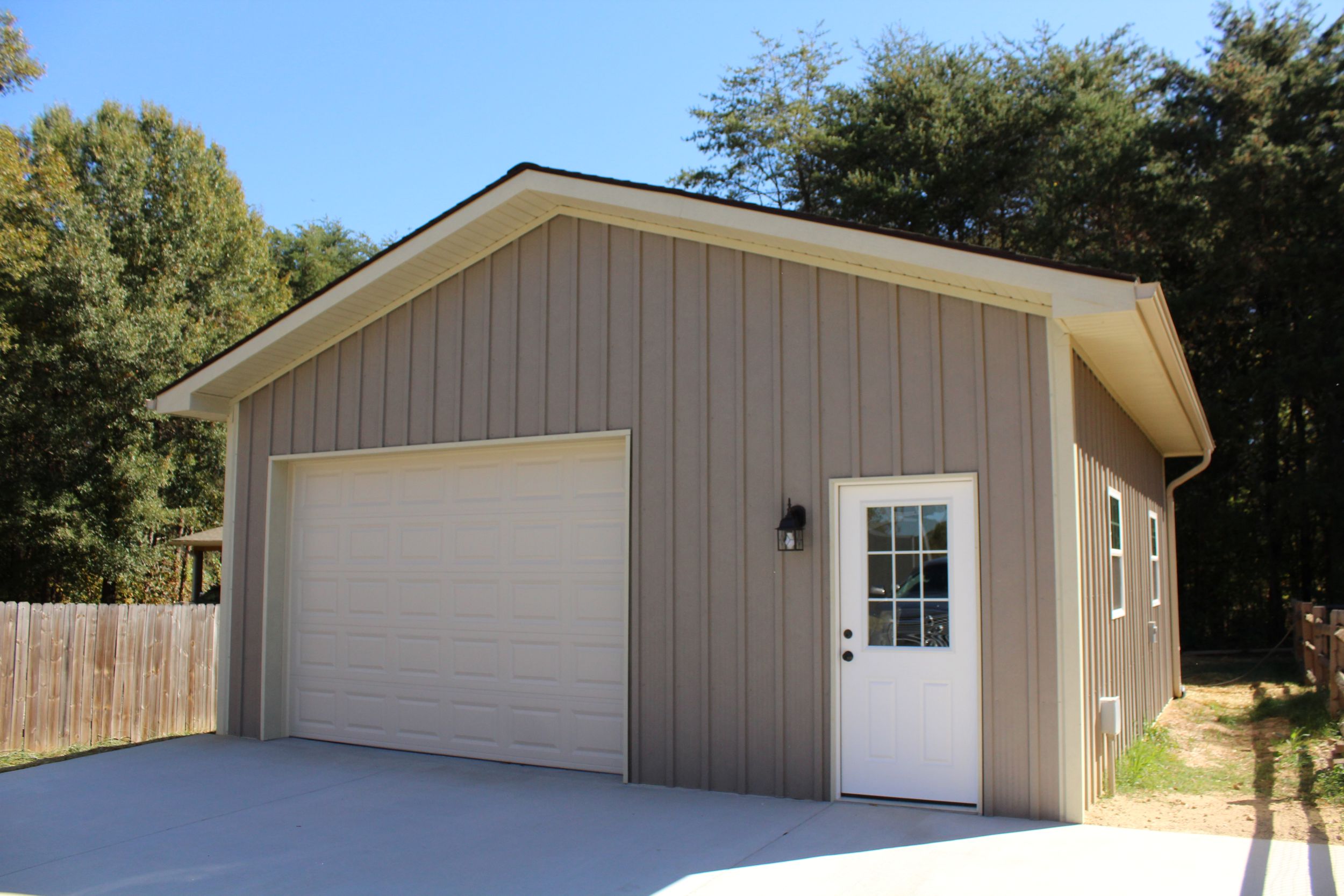
Top 5 Custom Features to Add to Your Hobby Barn


Most people spend months planning their hobby barn. They agonize over size, placement, and budget. And then, somewhere along the way, they realize they didn't think hard enough about the details.
The shell is one thing. But the custom features you build into that shell are what turn a basic post-frame structure into a space you'll actually use and love for decades.
We've built a lot of hobby barns across the Winston-Salem and Clemmons area. And after every project, clients almost always say the same thing: I'm glad I added that. The features below are the ones that come up most often. The ones that make the difference between a barn you store stuff in and a barn you can't wait to get to.
Here are the top 5 custom hobby barn features worth adding to your build.
1. A Storage Loft
If your hobby barn has vertical space, use it.
A storage loft is one of the most popular custom features we build, and it's easy to see why. You're already paying for the height. A loft lets you put that space to work: extra storage up top, full working space down below.
The right loft design depends on how you plan to use it. Some clients want something simple: a platform for bins, seasonal gear, or overflow storage. Others want something you can actually spend time in. Either way, it's a decision you want to make at the design stage, not after the frame is up.
Take a look at the Graves Project to see how a well-designed hobby barn loft comes together.
2. A Lean-To or Covered Porch
A lean-to is one of the best value adds in custom pole barn design.
It's a covered extension off the side of your building. Open on the sides, protected overhead. And it changes how you use the space entirely. Park equipment under it. Stage materials before a project. Set up a covered work area for the messier jobs. Or just put a couple of chairs out there and enjoy your property.
Covered porches serve a similar purpose on the front or side of the structure. They add character, create an outdoor gathering spot, and make the whole building feel more intentional.
Both features are built at the shell level. No interior finishing required.
See how we used a lean-to on the Seagraves Project for a look at how it integrates with the overall build.
3. Oversized or Custom Garage Doors
Standard garage doors work fine for standard vehicles. But a lot of hobby barn owners aren't working with standard vehicles.
If you've got a truck and trailer, an RV, a boat, or a piece of equipment that needs to roll in and out, door size matters. A lot. Ordering an oversized garage door at build time is a fraction of the cost of modifying the opening later. And it's the kind of thing you'll appreciate every single time you pull in.
Beyond function, the door style itself shapes how your barn looks. Carriage-style doors, roll-up doors, sliding doors. The right choice depends on your clearance, your usage, and the overall look you're going for.
The Honeycutt Project is a good example of how door sizing and placement can be built around how you actually use the space.
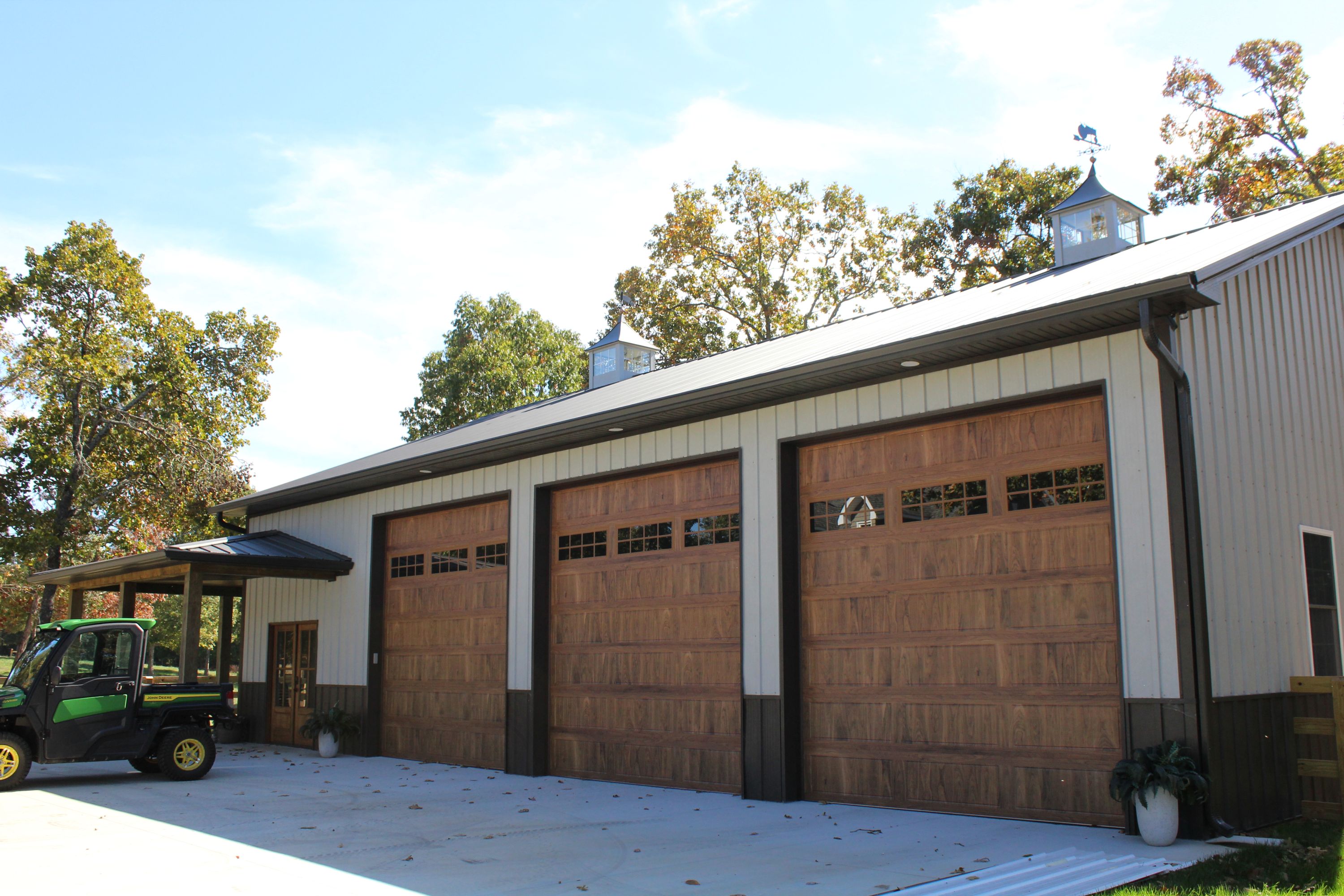
4. Cupolas and Exterior Details
Cupolas don't add square footage. They don't change how the building functions. But they do something else entirely.
A cupola on a hobby barn signals that someone cared about how this building looks. It adds a roofline focal point, a nod to classic barn craftsmanship, and a level of curb appeal that a plain metal roof just can't match. For buyers who want their property to look like it was designed, not just built, it's worth every penny.
The same goes for other exterior details: trim colors, ridge caps, decorative vents. Small decisions that add up to a building you're genuinely proud to own.
See how exterior detailing comes together on the Custom 3-Bay Garage and Workshop project.
5. Wainscoting and Accent Metal Panels
Two-tone metal siding is one of the simplest ways to make a custom hobby barn look custom.
Wainscoting adds a contrasting panel color along the lower portion of the building. It breaks up what would otherwise be a flat wall of single-color metal, gives the structure some visual depth, and protects the lower siding from scrapes, equipment contact, and general wear over time. It's practical and it looks good.
Accent panel combinations are worth spending time on during the design phase. Color and contrast choices are permanent once the metal goes up, so it's not a decision to rush.
Take a look at the Large 2-Bay Equipment Pole Barn for an example of how exterior panel choices shape the final look of a build.
Build It Right the First Time
The features above aren't expensive upgrades. Most of them are decisions you make at the design stage, and the cost difference at build time is far smaller than the cost of adding them later.
That's the thing about a custom post-frame building: the window for getting it right is during the build. Once the shell is up, your options get a lot more limited and a lot more expensive.
If you're planning a hobby barn in the Mocksville, Salisbury, Winston-Salem, Clemmons, or greater Forsyth County area, we'd love to talk through what makes sense for your project.
Since 2015, Carolina Custom Barns has been building high-quality post-frame shells and exteriors for homeowners and businesses across North Carolina. From first conversation to final completion, our crews are here to help you design and build a structure you're proud of. Reach out today for a free quote and initial consultation.